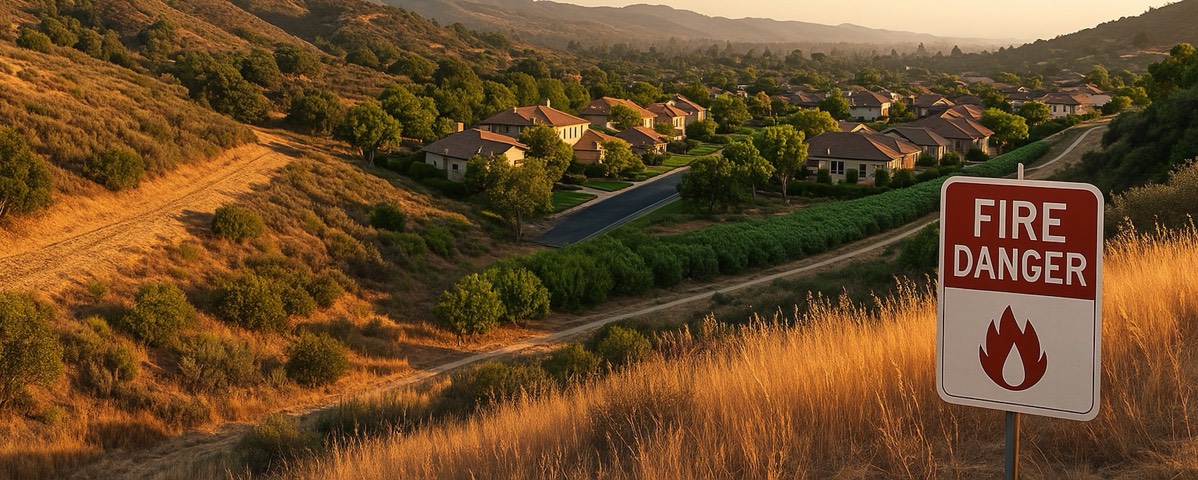
Additional fire and safety information, including more details about evacuation routes, is available for members here.
Wildfire Risk
Fire Safety and Resources
Keeping our community prepared—before, during, and after a fire.
Emergency & HOA Contacts
Fire, Police, Medical
DIAL 911
Use for any active fire, smoke, or life-threatening emergency.
Local Fire Department
(805) 686‑5062
168 West Highway 246, Buellton
Alerts
For fire alerts, go to https://www.readysbc.org/. Also, you may wish to add the Watch Duty Wildfire Maps app, which has an 🔥 emoji.
Wildfire Preparedness (Defensible Space)
Defensible Space
- Maintain 0–5 ft ember-resistant zone; no wood mulch against structures.
- Keep 5–30 ft lean, clean, and green—prune limbs 6–10 ft from ground.
- Within 30–100 ft, reduce fuel continuity; space trees and remove ladder fuels.
Home Hardening
- Install Class A roof, ember-resistant vents, and 1/8" mesh screens.
- Use non-combustible fencing/gates within 5 ft of structures.
- Clear gutters/roofs of dry leaves and needles monthly in fire season.
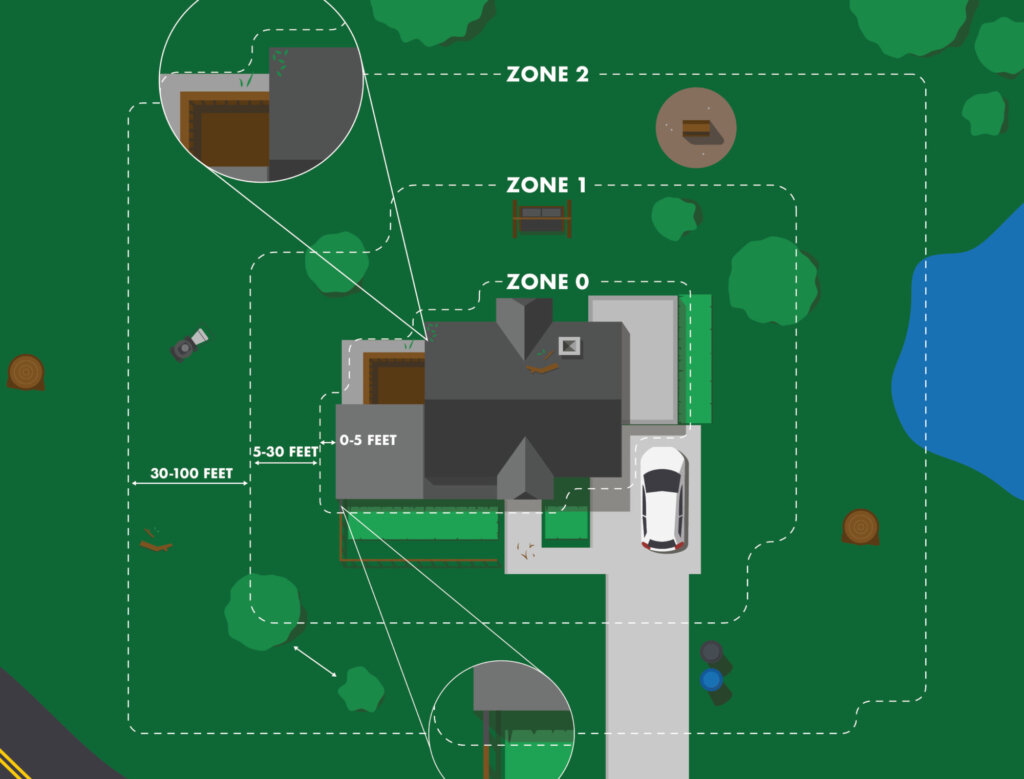
In each zone, the intensity of vegetation management increases as you get closer to your home. The goal is to start at your house and work outward, reaching up to 100 feet or your property line.
Zone 0: Zone 0 extends 0- 5 feet from your home, focusing on intense fuel reduction to protect against ember attacks.
Zones 1 & 2: These zones cover up to 100 feet around your home. They’re required by law and involve varying levels of vegetation management.
(from CalFire)
An excellent video from the Santa Barbara Firesafe Council can be found here.
Home Prevention Checklist
Alarms & Electrical
- Smoke alarms in every bedroom, hallways, and each floor; test monthly.
- Replace alarms at 10 years; batteries annually or per manufacturer.
- Avoid overloaded outlets and daisy-chained power strips.
- Have a licensed electrician inspect aging wiring.
Kitchen, Heating & Storage
- Never leave cooking unattended; keep a lid handy for grease fires.
- Keep heaters 3 ft from anything that can burn; clean dryer vents.
- Store gasoline/solvents in approved containers away from living spaces.
- Know the PASS method for extinguishers: Pull, Aim, Squeeze, Sweep.
Pet and Equine Safety
Small Pet Evacuation
- Prepare a carrier, leash, food/water for 72 hours.
- Keep vaccination records and microchip info in go-bag.
- Label carriers with your name, unit, and phone.
- Each horseowner should develop an optimum plan for evacuating or releasing their animals.
- Horseowners with trailers should be prepared to assist with their neighbors' horses as necessary.
Downloadable Resources
Below is a sample of the wealth of resources available for fire protection. The Santa Barbara Fire Department Ready, Set, Go program gives a good summary.
After a Fire: First Steps
- Ensure everyone is safe and accounted for at an assembly point.
- Call your insurance company; begin a claim and document damage.
- Notify the HOA using the incident form; coordinate restoration access.
- Do not re-enter structures until cleared by fire officials.
- For temporary housing and aid, contact local relief organizations.